

NIH-funded MSU study delivers results in rural Michigan
December 4, 2025
For a decade, Jane Hiske lived in denial of her diabetes diagnosis.
“I watched my own brother start out with just a sore on his foot. He had to have part of his foot taken off. Then the toes had to come off with another surgery. They ended up taking him at the knee. That’s when it hit me, this is serious."
Despite nationwide improvements in cardiovascular disease mortality and morbidity, deaths among adults with Type 2 diabetes are two to four times higher than those without the disease. A key contributor to these outcomes is patients not taking their medication as recommended.
Taking care of her brother when he lost his leg to diabetes is what finally prompted Hiske to see her doctor. She was shocked to see her A1c at 11.6%.
“I needed someone to scare me. No one was doing that until I saw that A1c. Once I saw that, I was ready for the program.”
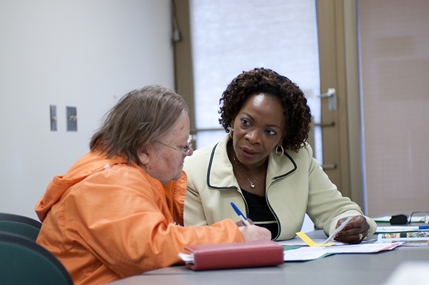 Last year, Hiske enrolled in Office-Guideline Applied to Practice IMPACT, a program designed to improve medication adherence and prevent cardiovascular disease in patients with diabetes. With funding from the National Institutes of Health, Adesuwa "Ade" Olomu, associate dean for faculty affairs and the Blanch B. & Frederick C. Swartz Endowed Professor of Medicine at the Michigan State University College of Human Medicine and her co-investigators are studying how the program can help patients take control of their health.
Olomu’s Office-GAP IMPACT program takes place in Federally Qualified Health Centers in three counties in Michigan with the help of clinical research coordinators like Sandy Samp. She met Hiske at Alcona Health Center in Alpena County.
“Half the battle was meeting Sandy,” said Hiske. “What a peach. We’re just so much alike.”
Samp and Hiske’s relationship bloomed through the Office-GAP IMPACT program, which helps patients and providers work together. The program provides an initial educational group visit and simple checklists that are completed jointly by the patient and provider during regular office visits. Patients are followed during office visits for one year at one, three, six, nine and 12 months.
“I just love connecting these individuals with the resources needed to help them understand diabetes, in turn helping the participants truly get what they needed to make it easier to self-manage their health,” said Samp.